
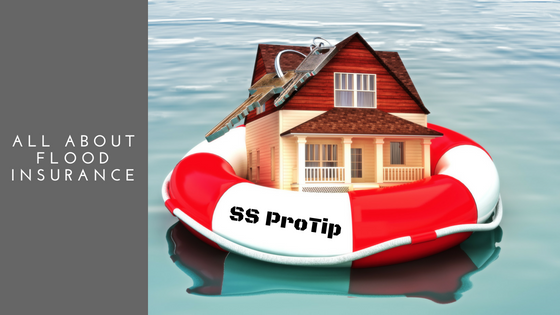
All About Flood Insurance
Considering the fact that Governor Rick Scott has already declared the first state of emergency of this hurricane season, we thought it would be a great time to talk about flood insurance. In this week’s #ProTipTuesday we will cover several frequently asked questions about flood insurance and talk about best practices.
- Hurricane and other flood damage is not covered by Homeowner’s Insurance in most cases.
While your Homeowner’s policy may offer protection from certain weather-related damages, like wind and rain, it does not cover you for flooding. The rule of thumb that we have been told by the insurance agents we work with is “homeowner’s policies cover you for falling water not rising water.”
- Flood Insurance is probably not required by your mortgage lender.
If you live in a flood zone and do not own your home outright, you would be required to have flood insurance because federally regulated banks mandate it. If you are not in a flood zone, you are not required to have it. That doesn’t mean you shouldn’t. Several areas in North Florida that were not in flood zones experienced flooding from hurricanes the last two years in a row. If you flooded, we don’t need to tell you that flood insurance is well worth the price. According to some estimates as much as 20% of flood claims are from non-flood zone areas.
- Flood Zones have moved in the last few years.
Especially in South Florida, like Palm Beach, flood zones have been changed. Some homes that were not previously in a flood zone now are. You can contact your insurance agent to confirm but typically either your provider or mortgage lender will notify you.
- Flood Insurance may not be as expensive as you think.
The average annual premium in Florida is $500. Yours could be higher or lower based on several factors like location, price and coverage amounts. After narrowly avoiding flood waters in 2016, the Stahl and Stahl team got the hint and bought the coverage even though it wasn’t required. The piece of mind is worth the cost, especially after back to back “100-year floods”.
- You can’t just call and get covered when a storm is on the way.
You could imagine that everyone would use that loophole if it existed. After requesting coverage there is a delay of around 30 days before you are covered, depending on provider. FEMA is the largest and least expensive provider, but you can get insured through a private entity. Coverage delays may be shorter with the private outfits.
- Why not just rely on disaster assistance?
Disaster assistance is only available if a federal state of emergency is declared. At that point, a “low interest” loan is made to you. This means you could end up having to pay a couple hundred extra dollars each month, on top of your mortgage for the next 30 years, to pay back the loan.
- What is covered?
Property and personal property damage is covered up to a certain dollar amount. You can find out specifics by contacting an insurance agent. We have some great folks that we work closely with that we can put you in touch with.
If you have any questions that were not addressed fell free to comment or give us a call to ask. We might not know the answer, but we know who will. The bottom line is that, while it is not at all necessary for many of you, it can be some relatively cheap piece of mind knowing that your biggest individual asset is covered if the worst happens. Let’s hope we are just wasting our money this year, we’re okay with that.