
Farmhouse Chic on a Shoestring Budget
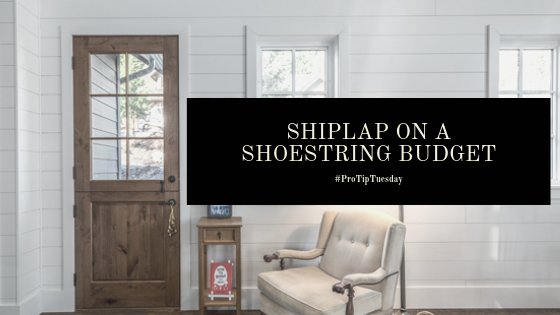
Shiplap has become one of the most used real estate related terms recently. “Curb Appeal” has been in the general lexicon for a while. But the Gaines’ incredibly popular show is almost single handedly responsible for the Shiplap Boom. It looks great, and adds great texture to a generally boring surface. Fingers crossed it isn’t just the next floral wallpaper. If you have ever thought it would be a good addition to your house only to rule it out due to cost. This week we will share a secret with you for budget shiplap. We have seen this in some builders’ model homes too. If nothing else, you can use this knowledge to decipher the real deal from the budget-friendly version.
1. Cut (or have someone else cut) 6” wide strips of plywood to mimic the look.
- 1/4” Plywood is very cheap by comparison and achieves the same look for the most part.
- You can use thinner plywood, it is cheaper, but be aware that the thinner you go the more you depart from the 3D look and the closer you get to glorified wood paneling.
- The most important thing is that the lines are straight. Use a table saw this is not the corner to cut.
- Watch out for splinters. If the saw blade is not extremely sharp, you will probably need to sand the sides and ends.
2. Make sure you find the wall studs and mark them before you start nailing the strips into place.
3. Using popsicle sticks as spacers between strips (vertically and horizontally) you can achieve the much sought-after farm house chic effect.
4. Make sure you do not stack full-length strips on top of each other, you want a semi-random vertical seam pattern. Not lined up but not a predictable brick-like pattern either. Depending on the length of the wall you can just start the next row with what is left of the last strip you cut to length.
5. You can leave a bit of exposed wall at the bottom. The baseboard will cover some anyway.
6. Use outside and inside corner trim.
- The ends will be very difficult, if not impossible, to join at a 45 degree angle because it is just layers of wood sheets pressed together.
This is not a one-off Stahl and Stahl Group idea. There are several good tutorials available online. We have seen it in person. If we didn’t know this trick, we would have bee fooled. Let us know if you have tried or do try it. We would love to see your results. This one is on our to-do list for sure.